
Uncategorized
Undermount vs Side-Mount vs Bottom-Mount Drawer Slides: Which Is Right for Your Build?
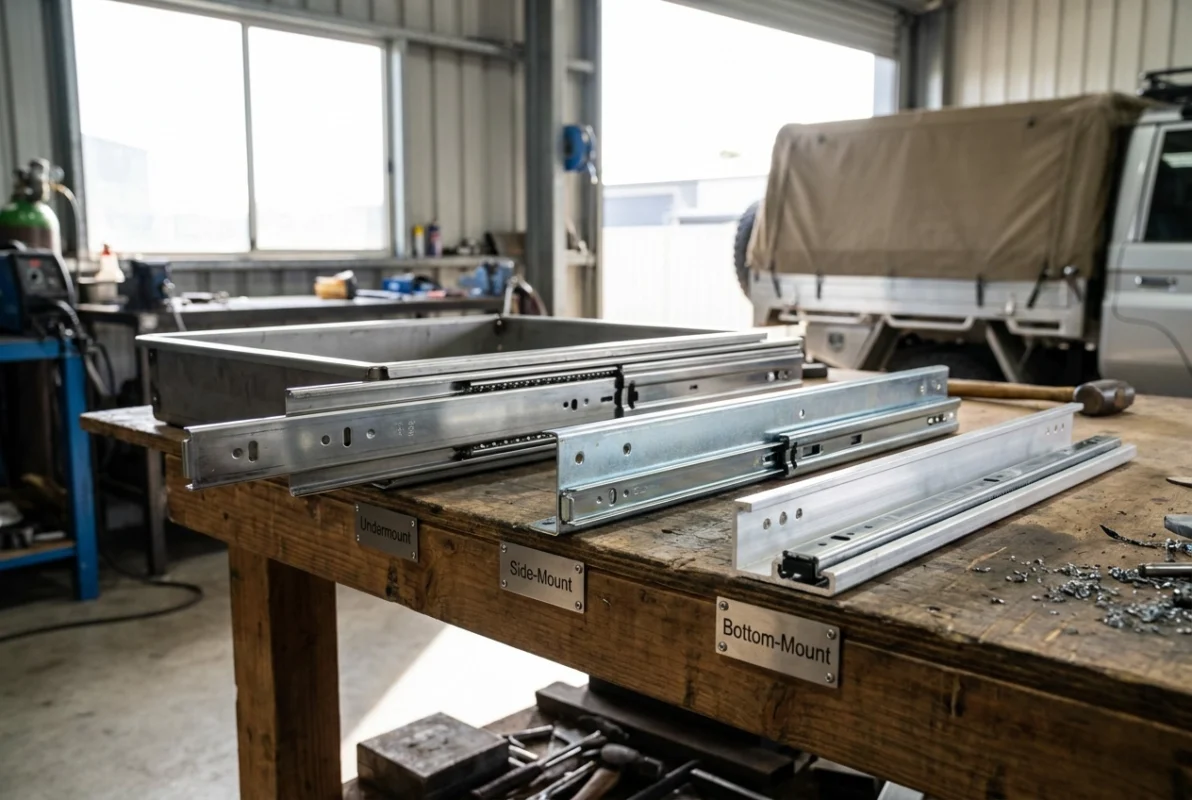
Oct
Ordering the wrong drawer slides is a surprisingly common and expensive mistake. The three main mounting styles look similar in product listings, but they perform very differently depending on your application, drawer dimensions, and installation environment. If you have ever received a shipment of undermount drawer slides only to discover your drawer boxes are too shallow, or installed side-mount slides on a furniture piece where the hardware is visible every time the drawer opens, you already know how costly the confusion can be.
This guide breaks down the practical differences between undermount, side-mount, and bottom-mount drawer slides so you can match the right hardware to the job before you place an order. When you are ready to order, browse our drawer slides and runners. You will learn how each mounting style affects load capacity, drawer width, installation complexity, and overall cost. You will also get specific guidance for two distinct use cases that demand very different approaches: static residential and commercial cabinetry, and mobile or vehicle-based builds where vibration, weight distribution, and space constraints change the equation entirely. Whether you are building kitchen cabinetry, a work truck toolbox, or a mobile workshop, the right choice starts with understanding what separates these three systems.
At a Glance: How the Three Mounting Styles Compare
Undermount and bottom-mount slides are not the same thing, despite being treated interchangeably across most generic sources. The distinction matters: undermount slides mount beneath the drawer box with fully concealed hardware and suit precision cabinetry; bottom-mount slides use a single centre track on the cabinet floor and target light-duty face-frame applications at a lower price point. Confusing the two at the ordering stage is a common and avoidable mistake.
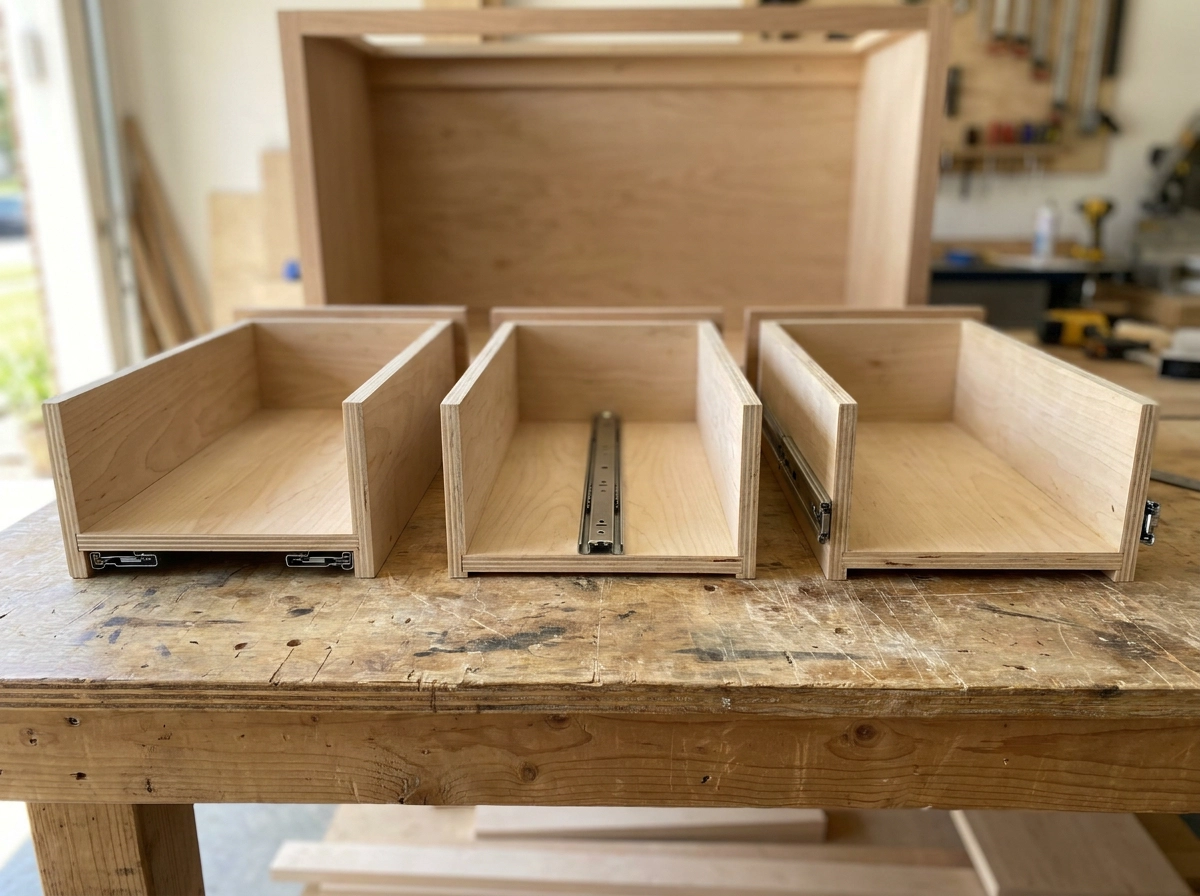
The table below captures the practical differences across all three mounting styles at a glance.
| Criteria | Undermount | Side-Mount | Bottom-Mount |
|---|---|---|---|
| Typical load range | Medium-high; product-dependent | Light to extreme duty (50-340 kg/pair) | Light duty only |
| Aesthetics | Hardware fully hidden when open | Hardware visible on drawer sides | Centre track visible below drawer |
| Installation complexity | High; tight drawer-box tolerances required | Moderate; adjustable, forgiving on imperfect frames | Low; simple centre-track alignment |
| Ideal applications | Kitchen cabinetry, bathroom vanities, quality furniture | 4WD canopies, ute trays, caravans, toolboxes, industrial storage | Light-duty face-frame cabinets, utility rooms |
| Relative cost | Higher | Mid-range to high depending on duty rating | Lowest |
Vehicle and mobile builds, including 4WD canopies, ute trays, caravans, camper trailers, and toolboxes, favour side-mount drawer slides for reasons this table introduces and the following sections expand: load distribution across two mounting points, vibration resistance, compatibility with locking mechanisms, and tolerance for the imperfect surfaces common in welded steel frames.
Two additional variables layer on top of mounting style and are addressed in the application section: material specification (stainless steel versus standard steel) and locking versus non-locking variants. Both decisions depend on environment and use case, not mounting style alone.
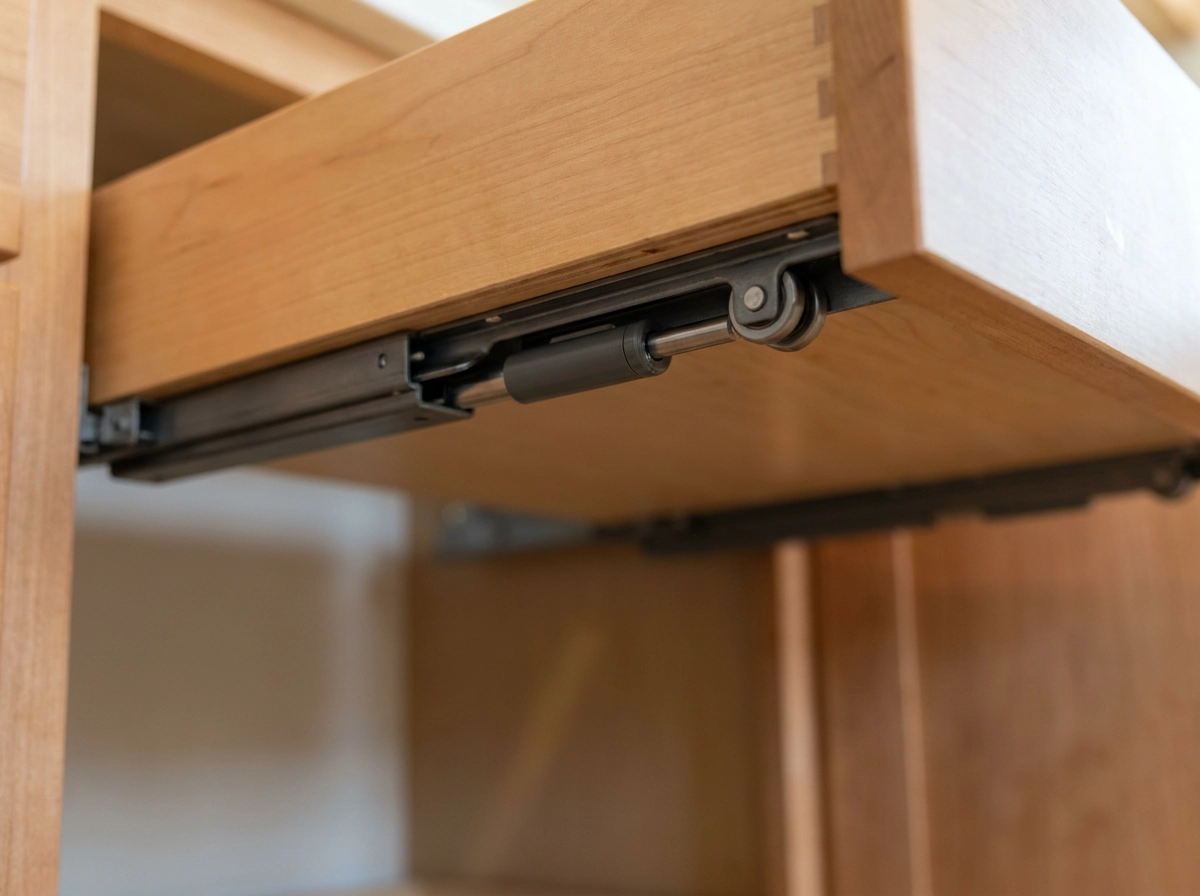
Undermount Drawer Slides: Clean Aesthetics, Precise Requirements
Undermount slides mount the slide body to the cabinet floor, directly beneath the drawer box. The drawer rides on top of the slide mechanism, and when the drawer is open, all hardware remains completely out of sight. No rails are visible on the sides, no tracks are visible on the bottom front. The result is a clean, furniture-grade finish that other mounting styles cannot replicate.
Advantages worth noting:
- Concealed hardware gives kitchen cabinetry, bathroom vanities, and furniture builds a high-end appearance that holds up at close range
- Maximum drawer width is achievable because no slide body occupies side clearance; the full interior width of the cabinet opening is available to the drawer box
- Load capacity is product-specific; consult the rated capacity for the individual slide before specifying
The tolerance problem
Undermount slides are unforgiving of imprecise drawer-box construction. The slide mechanism engages the underside of the drawer box within a defined height window specified by the manufacturer. Building outside that window can cause binding on extension, misalignment at the front, or accelerated wear on the engagement clips. Building to the slide manufacturer’s specified drawer-box height is not optional; it is the baseline requirement for the hardware to function correctly. This demands either CNC-machined components or careful hand-building with consistent material thickness throughout.
Shallow drawer limitation
Because the slide body sits beneath the drawer box, it consumes vertical space below the box floor. Standard undermount hardware has a minimum drawer-box height requirement, check the manufacturer’s specification sheet before cutting components, as shallow spice-drawer or tray configurations will often fall below it.
Where undermount slides belong
Undermount slides are the right choice for static indoor builds where appearance is the priority and drawer boxes can be constructed to precise specifications: kitchen cabinetry, bathroom vanities, laundry furniture, and custom furniture pieces. These environments are controlled, the drawer boxes are built from consistent-dimension sheet goods, and the concealed hardware genuinely justifies the higher cost.
Why vehicle builds are the wrong application
Road vibration imposes continuous stress on the underfloor mounting points, and the engagement between the slide and the drawer box is not designed for the lateral and vertical shock loads generated off-road or on corrugated surfaces. Welded steel frames in canopies and ute trays rarely hold the dimensional consistency that undermount hardware requires. And the aesthetic argument, the primary reason to choose undermount slides, is irrelevant inside a toolbox or storage drawer where finish is never the deciding factor.
For vehicle, trailer, and industrial builds, the next section covers the slide type that actually suits these demands.
Side Mount Drawer Slides: The Workhorse for Industrial and Vehicle Builds
Where undermount hardware reaches its limits, side-mount slides take over. For vehicle builds, industrial storage, and any application where loads are heavy or conditions are demanding, side-mount is the default specification.
How they work: A single rail mounts to each side wall of the cabinet or frame. The mating member fastens to the corresponding side of the drawer box. When loaded, both rails share the weight simultaneously, distributing force across the full width of the assembly rather than concentrating it at a single point below the drawer.
Height Versatility
Side mounted drawer slides impose no meaningful minimum drawer height. Because the rails mount to the side walls rather than beneath the box, there is no hardware consuming vertical clearance below the drawer floor. This makes side-mount the practical choice when drawer heights vary across a build, or when shallow drawers must sit alongside deeper ones in the same cabinet run.
Load Capacity and Dynamic Performance
Bilateral load distribution allows side-mount configurations to handle heavier and more dynamic loads than comparable bottom-mount options. Load capacity in drawer slides varies significantly by mount style and material, with side-mount designs capable of reaching 600 lbs (approximately 270 kg) depending on construction. For tools, recovery gear, and equipment stored in 4WD canopies, ute trays, and trailer systems, this capacity margin matters.
Vibration and Racking Resistance
The dual side-bearing geometry resists lateral racking forces, the twisting loads that occur when a vehicle corners hard, hits corrugations, or loads shift during braking. For repeated off-road use and heavy-duty cycling, this mechanical advantage translates directly into longer service life and sustained slide alignment.
Locking Variants
Side-mount configurations are the most common platform for locking drawer slides. An integrated latch or lever mechanism holds the drawer closed against movement, preventing unintended opening under braking or on rough terrain. Locking variants are far more common and available across a wider duty range in side-mount configurations than in undermount or bottom-mount formats, confirm availability before specifying if locking is a requirement.
Material Selection
Stainless steel side-mount slides are the correct specification for ute trays, open trailers, and coastal environments where corrosion exposure is ongoing. Stainless resists salt, moisture, and repeated wash-down without surface degradation that would compromise slide performance over time.
Standard steel slides (zinc-plated or powder-coated) are appropriate for enclosed cabinetry, workshop drawers, and any installation protected from direct weather exposure. They cost less than stainless and perform well in dry, controlled environments.
Installation Tolerance
Side-mount slides are more forgiving to install than undermount hardware. Slotted or multi-position mounting holes allow lateral and depth adjustment after initial fitting. On welded steel frames, where surfaces are rarely perfectly parallel, and on timber builds where material movement is a factor, this adjustability reduces fitting time and eliminates the precision-machined tolerances that undermount hardware demands.
Bottom Mount Drawer Slides: Where They Fit and Where They Fall Short
Where side-mount slides handle the heavy lifting, bottom-mount slides occupy a narrower and more specific role in the hardware selection hierarchy.
A bottom-mount slide runs along the bottom centre of the drawer box and engages a single track mounted to the cabinet floor. This is a meaningful structural difference from undermount slides, which mount fully beneath the drawer box with hardware completely concealed. With bottom-mount hardware, the track sits below and behind the drawer front and remains partially visible. It is not a concealed system, and the two types should not be treated as equivalent despite frequent overlap in supplier terminology and search results.
Where bottom-mount slides are appropriate
The format suits light-duty face-frame cabinets, entry-level furniture, and laundry or utility cabinetry where load requirements are modest and cost is the primary constraint. For high-volume cabinet builds carrying household items, clothing, or light supplies, bottom drawer slides are a practical and widely available option in standard sizes.
The cost advantage is real. Bottom-mount slides are generally the most affordable mounting style, and their prevalence in the market means standard sizes are easy to source. For a builder fitting out a row of utility cabinets with no load demands, this is a legitimate selection.
Load limitations that define the ceiling
The single centre-track design limits practical load capacity and lateral stability. This constrains the format to lighter household loads and makes it unsuitable for tools, heavy storage, or anything carried in a mobile environment.
Why vehicle and industrial use is ruled out
In any application involving vibration or dynamic loading, the centre track is vulnerable to lateral movement. Under repeated road stress, the single-point load path accelerates wear and produces alignment drift over time. Locking variants suited to mobile use are not a feature of standard bottom-mount slide formats, which limits their suitability for any moving vehicle application.
Avoiding terminology confusion when ordering
The terms “bottom-mount” and “undermount” are used interchangeably by some suppliers and appear mixed in search results for both. Before ordering, confirm the actual mounting architecture from the product drawing or specification sheet:
- Undermount: slide body mounts beneath the drawer box; hardware fully concealed when the drawer is open
- Bottom-mount: floor-mounted centre track engages the underside of the drawer box; hardware visible below the drawer front
Relying on the product name alone is a reliable path to receiving the wrong hardware. Verify the mounting method directly.
Choosing by Application: Static Cabinetry vs Mobile and Vehicle Builds
Knowing which mounting style suits each environment condenses the earlier technical detail into practical decisions by build type.
Static Indoor Cabinetry
For kitchens, bathrooms, and furniture workshops, undermount slides are the premium specification where drawer boxes can be built to tight tolerances and a clean finish is the priority. Bottom-mount slides are acceptable for light-duty face-frame cabinets when budget drives the decision. Side-mount slides become the right call when load requirements exceed what undermount hardware can support, or when installation conditions, such as site-built cabinetry or less controlled shop environments, make precise drawer-box tolerances difficult to guarantee.
4WD Canopies and Ute Trays
Side-mount heavy-duty slides are the standard for these applications. The build demands locking mechanisms to prevent drawers opening under braking or on corrugated terrain, load ratings sufficient for recovery gear and tools, and corrosion resistance suited to outdoor exposure. In coastal regions or builds subject to regular wash-down, stainless steel side-mount slides justify the cost premium; the surface corrosion that degrades standard steel significantly shortens service life in these conditions.
Caravans and Camper Trailers
Side-mount slides suit kitchen drawers, pantry storage, and under-bed systems in caravan and camper trailer builds. Locking variants are essential since the vehicle moves with drawers loaded. Drawer widths in these builds are frequently constrained by the vehicle envelope, and the lateral adjustability available with side-mount hardware is a practical advantage over undermount, which requires more precise initial alignment.
Toolboxes and Workshop Storage
Side-mount slides in steel or stainless steel handle the load demands of hand tools, power tools, and workshop consumables. Full-extension variants are the correct specification here; complete drawer travel is a genuine working requirement when retrieving tools from the back of a deep drawer, not a convenience feature.
Trailer and Industrial Storage Systems
For trailers carrying electrical equipment, hydraulic tools, or bulk consumables, side-mount slides rated at 100 kg or above per pair are appropriate. One critical distinction: static load ratings do not reflect mobile-use performance. Dynamic loading in a moving vehicle imposes significantly higher stress than static loading, so confirm the dynamic rating before specifying a slide for any trailer or mobile industrial application.
Material Specification by Environment
- Stainless steel side-mount slides: exposed ute trays, open trailers, marine and coastal environments, wash-down applications
- Zinc-plated or powder-coated steel side-mount slides: enclosed canopies, workshop storage, caravans, camper trailers
- Undermount slides (steel or zinc-alloy): static indoor cabinetry only; not appropriate for vehicle or outdoor builds
Common Ordering Mistakes and How to Avoid Them
Even with the right mounting style selected, ordering errors are common enough to derail a build before installation starts. These are the mistakes that show up most often.
Ordering undermount slides for a vehicle build. This is the most expensive mistake on the list. Undermount slides are engineered for static indoor cabinetry with precise timber drawer boxes. Welded steel frames in 4WD canopies and ute trays introduce vibration, lateral racking forces, and tolerance variation that undermount hardware is not rated to handle. The result is premature wear, misalignment, or complete failure in the field.
Confusing bottom-mount and undermount when searching online. As covered in the bottom-mount section above, product names alone are unreliable, always confirm the mounting method from the product drawing or specification sheet before ordering.
Ignoring the difference between static and dynamic load ratings. A slide rated at 45 kg static does not deliver 45 kg of usable capacity in a moving vehicle. Off-road driving imposes dynamic loads that exceed static ratings, build in a meaningful capacity margin above the expected static load and confirm the slide’s dynamic rating with the supplier.
Measuring drawer length instead of cabinet depth. Slide length is determined by the internal depth of the cabinet opening, not the external length of the drawer box. Measure the internal cabinet depth from front to rear, then match the slide length to that dimension with a small clearance allowance. Ordering slides to drawer length is a common mismatch that results in slides that either hit the back of the cabinet or leave the drawer short of full extension.
Ignoring drawer-box height tolerances for undermount slides. Undermount slides specify a defined height clearance for the drawer box, confirm the manufacturer’s adjustment range before cutting drawer components, as even a small deviation can cause binding or play.
Specifying standard steel slides for outdoor or vehicle applications. Exposed environments including ute trays, trailers, and any build subject to rain or wash-down will degrade standard steel slide finishes quickly, leading to corrosion, stiff operation, and eventual failure. Budget for stainless steel or heavily zinc-plated slides wherever the build is exposed to weather or moisture.
How to Choose the Right Drawer Slide Mounting Style
Once you’ve worked through the common ordering mistakes, applying a structured decision sequence before you place the order eliminates most of the risk. Work through these steps in order.
Step 1: Define the application first
Decide whether the build is static indoor cabinetry or a mobile vehicle and trailer application before evaluating anything else. This single filter removes unsuitable mounting styles immediately. Undermount slides are viable for static cabinetry; they are not appropriate for vehicle builds. Side-mount slides suit both contexts. Bottom-mount slides are limited to light-duty static cabinetry only. Everything downstream depends on getting this right.
Step 2: Establish load requirements
Calculate the total weight of drawer contents at full load. For static cabinetry, match that figure to the slide’s rated capacity with a reasonable margin. For vehicle applications, confirm the slide’s dynamic load rating rather than relying on static capacity alone, and select a slide with a meaningful margin above the expected loaded weight.
Step 3: Measure accurately
Three measurements determine fit:
- Cabinet internal depth sets the required slide length; measure the usable travel distance, not the external drawer dimension
- Drawer-box height must fall within the tolerance window specified for undermount hardware; even a small deviation outside the manufacturer’s specified range can cause binding
- Drawer-box width determines available side clearance; confirm the gap between the drawer box and cabinet wall is sufficient for the side-mount slide body you intend to use
Step 4: Determine locking requirements
If the vehicle moves with drawers loaded, locking slides are not optional. Unlatched drawers under braking or on rough terrain are both a safety risk and a hardware reliability issue. Locking variants are far more common and available across a wider duty range in side-mount configurations than in undermount or bottom-mount formats, confirm availability before specifying if locking is a requirement.
Step 5: Select material based on environment
See the application section above for the full environment-to-material mapping.
Step 6: Confirm extension type
The toolbox and canopy use cases in the application section above cover the practical access requirements in more detail.
When to ask a specialist
Non-standard builds introduce variables that a standard selection process does not cover. If the application involves unusual load concentrations, non-standard frame materials such as aluminium extrusion or composite panels, or custom drawer geometries, confirm the specification with a hardware supplier who has direct experience across both cabinetry and vehicle-build applications before ordering.
The Bottom Line: Match the Slide to the Job
Once you’ve worked through the selection steps above, the decision usually comes down to a straightforward application match.
Undermount slides suit static indoor cabinetry where aesthetics matter and drawer boxes can be built to tight tolerances. The right choice is the one that matches your specific build, get the spec right before you order.
Side-mount drawer slides are the correct choice for virtually every vehicle, industrial, and heavy-duty application.
Bottom-mount slides serve one narrow role: light-duty face-frame cabinetry where budget is the primary driver and loads are low.
Trailer Parts Direct stocks a full range of side-mount drawer slides, including heavy-duty, locking, stainless steel, and full-extension variants, covering the full breadth of vehicle and industrial build requirements. Undermount options are also available for cabinetry projects where a clean furniture finish is the goal.
If you are not certain which slide suits your build, contact the Trailer Parts Direct team directly. Provide your application type, drawer dimensions, and expected load, and the team can confirm the correct specification before you order. Getting the spec right at the start avoids mismatched hardware, installation rework, and the cost of reordering, all of which add up quickly on a fabricated build.
Conclusion
Choosing the right drawer slide comes down to matching the mounting style to the demands of your specific build.
Specify correctly from the start and you avoid costly rework, mismatched hardware, and delayed builds.
Trailer Parts Direct stocks the full range to cover every application. If you are ready to order, browse the complete drawer slide range online. If you need guidance first, contact the team with your application details and load requirements. The right slide, fitted right, is the foundation of a build that performs reliably for years.